News Story
Maryland Engineering: Top 10 in the Country, 8 Years Running

For the eighth consecutive year, the A. James Clark School of Engineering at the University of Maryland ranks among the country’s top 10 public universities in graduate engineering, according to U.S. News & World Report’s 2026–27 rankings.
With more than 960 graduate students pursuing research degrees under the guidance of 215 tenure-track faculty, Maryland Engineering ranks 18th overall for the third consecutive year among more than 200 public and private engineering schools.
| Institution | Overall | Public |
|---|---|---|
| University of Maryland, College Park (A. James Clark School of Engineering) | 18 | 10 |
“The world’s most exciting technologies are developing at an unprecedented pace, and it’s engineers who are helping them mature: ethical and impactful use of artificial intelligence; the development of improved and sustainable energy sources and storage systems; expansion of quantum computing and networking systems; creation of smart manufacturing systems that strengthen our nation’s economy; integration of AI and advanced technologies into health care solutions that are accessible, affordable, and personalized to the patient; and more,” Clark School Dean Samuel Graham said.
“Our school is home for people with a passion to lead technological advancements that impact society, and the innovation and ingenuity to do it,” said Dean Graham. “I cannot thank our students, faculty, and staff enough: I am extremely proud of their sustained commitment to excellence in graduate research and education, and their focus on improving society.”
All degree programs ranked in the top 25 among publics
Three were ranked in the top 10.
| Individual Degree Program | Overall | Public |
|---|---|---|
| Aerospace | 13 | 8 |
| Bioengineering | 29 | 13 |
| Chemical & Biomolecular | 34 | 20 |
| Civil & Environmental | 34 | 21 |
| Computer | 16 | 10 |
| Electrical | 15 | 9 |
| Materials Science | 22 | 13 |
| Mechanical | 20 | 11 |
In January 2026, the school’s online graduate engineering program was ranked 11th overall among all U.S. schools and 8th among publics.
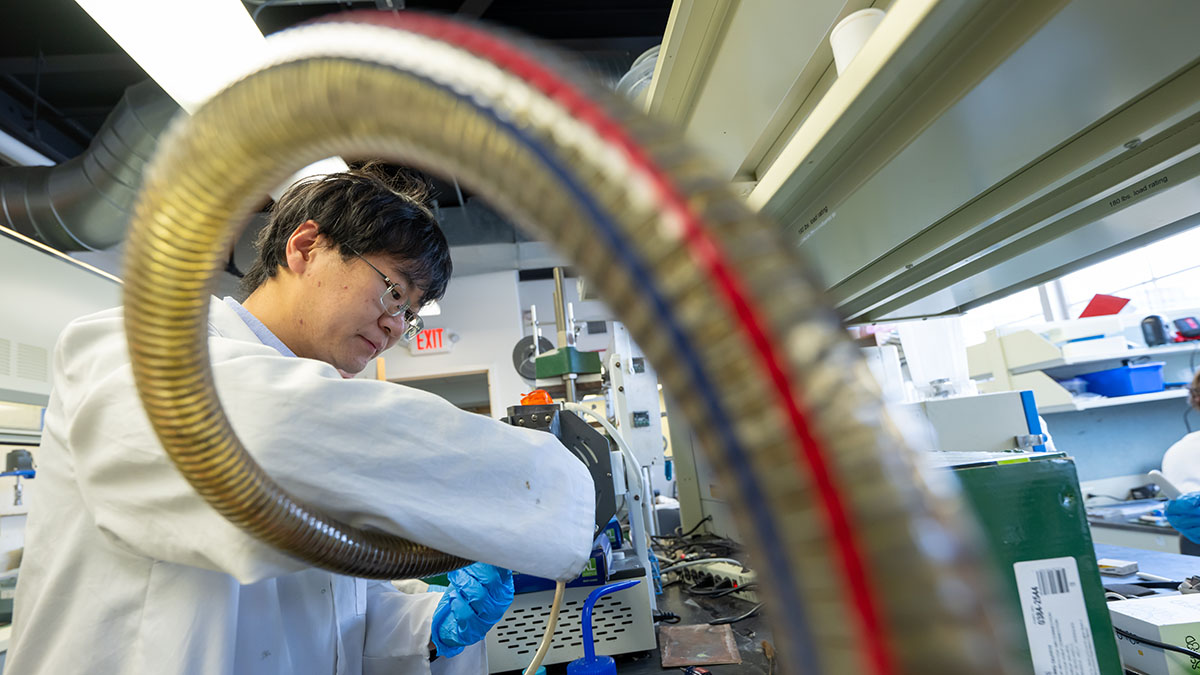
When our students, faculty, and staff share innovate, people tune in
The Clark School is continuing its trendsetting research in engineering and medicine, microelectronics, energy storage and production, autonomy, quantum technology, robotics, batteries, and more.
We have one-of-a-kind educational and research opportunities
- At the Edward & Jennifer St. John Center for Translational Engineering and Medicine in Baltimore, working with the University of Maryland School of Medicine, students can create technologies that improve clinical practice and patient care.
- At the MATRIX Lab in St. Mary’s County, they can help build new autonomous systems that will deliver medical supplies and disaster relief and address national security needs.
- In our engineering AI program, they can master the skills needed to apply AI to specific engineering fields.
We have trendsetting institutes and centers
Including ones focused on systems engineering, robotics, energy, extreme battery technologies, industrial AI, transportation, biomedical devices, disaster resilience, rotorcraft, advanced computer studies, and many more.
The Clark School also recently co-hosted a National Academy of Engineering-member led event, “Closing Strategy Gaps for the Future of AI Infrastructure,” focused on the needed advances in electronics and hardware, energy and water resources in data centers and physical AI systems, thermal management, export control and policy, and workforce development for AI.
We offer robust fellowship and award opportunities
- The Clark Doctoral Fellows Program supports up to 30 new high-performing engineering Ph.D. students each year as an impetus for research in strategic and vital areas
- We recognize excellence with Clark Doctoral Fellows Mid-Career Awards, Outstanding Graduate Assistant Awards, and the Charles A. Caramello Distinguished Dissertation Award
We are proudly training future educators and researchers
Our Future Faculty Program aims to:
- Increase the number of highly qualified educators produced by the Clark School
- Prepare selected doctoral students for successful careers as educators and researchers
- Place students in leading institutions for maximum impact and continued partnership with the Clark School
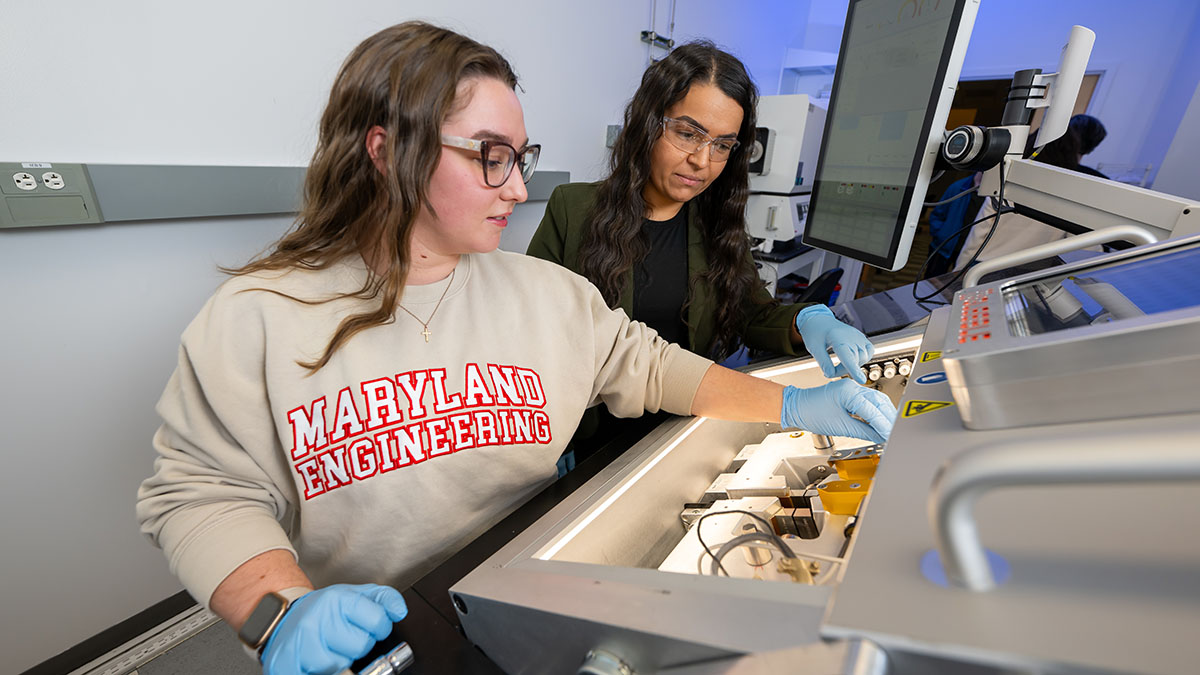
We prepare our students for meaningful careers
- Facilitating internships for mid-career students in our region, a hub of industry and government collaborative research
- Supporting research and professional development with an array of school and university-level award programs
- Collaborating with student leaders in the Engineering Graduate Student Society and Engineering Graduate Student Leadership Network to better tailor programs to graduate student needs
- Expanding Engineering Career Services with moderns and always-available tools to help students develop application materials and practice with AI-powered interviews before rehearsing with our experienced professional staff
New facilities that support future innovation and breakthroughs
During summer 2026, the school’s new $214.4 million interdisciplinary engineering building, Stanley R. Zupnik Hall, will reach substantial completion and move into preparation for our opening celebration. This new facility will support research in structures, environmental engineering, transportation, energy storage, data centers, quantum engineering, and physical AI. We are looking forward to inviting interdisciplinary teams to work in these spaces to create solutions to grand challenges in these fields.
The school is already home to some of the country’s signature entrepreneurial and research hubs, including the E.A. Fernandez IDEA (Innovate, Design and Engineer for America) Factory and the $86 million Southern Maryland Autonomous Research and Technology (SMART) Building, offering unique resources for innovating the next generation of AI and autonomous systems.
Published April 7, 2026
Related Stories
Stories / September 22, 2026
Two Years Running, Maryland #12 Among Publics for Undergrad...

Stories / April 8, 2025
Maryland Engineering: Top 10 Among Public Graduate Programs, 7...
Stories / September 18, 2023
Maryland Engineering Ranks Among the Nation’s Top 20...

Stories / April 25, 2023
Maryland Engineering Graduate Programs: Top 10 Among Public...

Stories / March 29, 2022
Maryland Engineering Graduate Programs: Top 10 Public, Four...

Stories / March 30, 2021
Maryland Graduate Engineering Ranked #10 Public in the Nation
Stories / March 14, 2011
Clark School #22 in Graduate School Ranking
Stories / May 18, 2021
Student Researchers Recognized with Wylie Dissertation...
Stories / September 12, 2012
Clark School Undergrad Program 23rd in Nation
Stories / June 29, 2012
Maryland is No. 1 for Entrepreneurship, Innovation